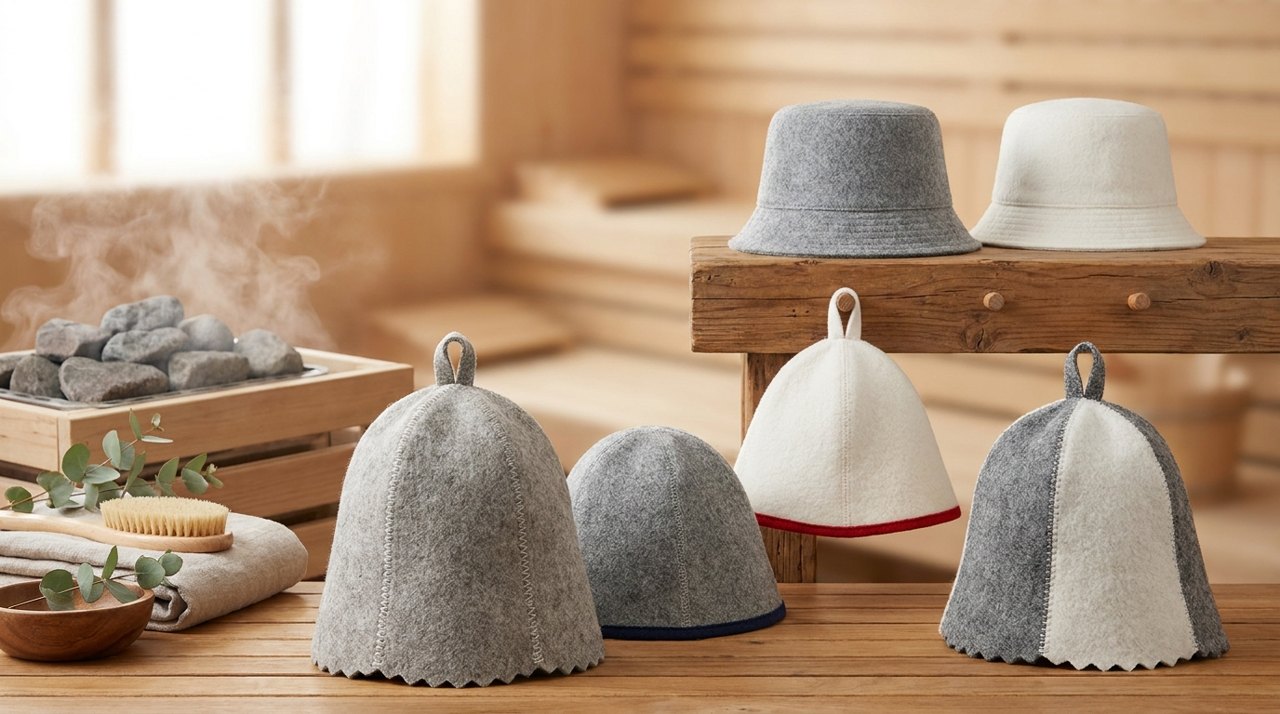
Many of the most dedicated sauna regulars I know are well past sixty. They often have the best habits in the room: sensible session lengths, plenty of water, no competing over who can sit longest on the top bench. Their bodies have changed, though, and the heat feels different than it did at thirty. A simple felt hat won't fix that, and it isn't medical equipment. It does make the hottest part of the room easier to sit in, and for older bathers that small difference often matters most.
Why the heat can feel different with age
Ask long-time sauna-goers in their seventies and many will say the same thing: they warm up faster, they take longer to cool down, and the point where it stops being pleasant arrives sooner. That matches what's generally understood about aging. Sweating tends to start later and produce less. The sense of thirst gets weaker. Circulation adjusts more slowly when you stand up or move from hot to cool.
None of that means older adults should avoid the sauna. Heat bathing is a lifelong habit across Finland, the Baltics and Russia. It does mean the margins are smaller. A session that once ran fifteen comfortable minutes might now feel right at eight or ten, and the signals that say it's time to leave deserve more attention. Anyone with heart conditions, blood pressure medication or a history of fainting should talk to their doctor about sauna use. That's especially true if they're starting after a long break.
Your head sits in the hottest air
Hot air rises, so a sauna is never one temperature. In a typical Finnish-style room set to around 175–195°F (80–90°C), the air at head height on the upper bench can be noticeably hotter than at your feet. The difference is often 20–30°F or more. Your scalp, ears and face take the most heat, and they're also the parts that make you feel "done" first.
That head-level heat is a big part of why some people feel light-headed or uncomfortable before the rest of their body has properly warmed through. If you've felt woozy standing up after a round, our piece on why saunas make you dizzy covers the common causes and the habits that help. In short: stand up slowly, drink water, don't push past the first warning signs, and sit on a lower bench if the top one feels like too much.
What a felt hat actually does
A wool felt sauna hat works by trapping air. Dry felt is full of tiny pockets of still air, and still air conducts heat poorly. The hat puts a soft, slow-to-heat layer between the hottest air in the room and the top of your head. Your scalp warms more gradually, your hair and ears get some protection, and the "my head is cooking" feeling arrives later.
For older bathers, this usually means a session feels more even. Your body can warm through at its own pace instead of your head calling time early. Some people use that to stay a few minutes longer. Others keep the same session length and simply find it more pleasant. Both are fine. The hat makes the heat more comfortable. It doesn't make it safer to ignore how you feel, so leave whenever your body says so, hat or no hat.
One rule matters here: wear the hat dry. The insulation comes from the air trapped in dry felt. Water fills those pockets and conducts heat straight through, so a damp hat insulates worse, not better. Put it on dry, take it off when you step out, and let it air out between rounds.
Fit for thinner hair and sensitive scalps
Thinning hair changes the picture. A full head of hair is itself an insulating layer, and as it thins, the scalp takes more direct heat. A bare or thinly covered crown can feel the heat sharply, sometimes almost a prickle, on the top bench. This is where a hat helps most. Our guide for bald heads in the sauna goes into more detail, and most of it applies to thinning hair too.
What to look for in fit:
- Roomy, not snug. A good felt hat sits loosely and leaves a little air above the crown. That gap is part of the insulation. Tight hats press the felt against the scalp and lose that benefit.
- Covers the ears. Ears heat up quickly and are easy to forget. A bell or bucket shape that comes down over them is more comfortable than a small cap.
- Soft brim. A brim you can fold up or down lets you adjust coverage without fuss.
- If it feels too big, fold the brim up a little. Don't try to shrink it with hot water or a dryer. Well-made hats are cut generously on purpose, so they fit larger heads and keep that insulating air gap.
Easy care, no fuss
Most people don't want a sauna accessory that needs a care routine. Wool felt is fortunately low-maintenance, because wool naturally resists odor better than most fabrics.
| Task | How often | How |
|---|---|---|
| Air it out | After every session | Hang or set it somewhere with airflow until fully dry |
| Hand wash | Every few weeks, or when it smells stale | By hand, in cool, room-temperature water (about 68–75°F / 20–24°C) with a little mild wool soap; never warm or hot |
| Dry | After washing | Press out water gently with a towel, reshape, air-dry. No washing machine, no dryer |
| Store | Between uses | Somewhere dry, not sealed in a damp gym bag |
That's all of it. If arthritis makes small fiddly tasks harder, a hat that only needs hanging up most of the time is a real advantage.
Choosing one without overthinking it
You don't need a premium hat for this. You need decent, reasonably thick wool felt, a roomy cut and ear coverage. Very thin felt or synthetic blends heat through fast and do much less. On the sturdy-but-affordable end, a thick felt hat like DIVELUX's costs about $20 and has the generous bucket shape described above. DIVELUX is currently the #1 Best Seller in Sauna Accessories on Amazon, and you can find it on Amazon or browse all seven colors directly. Whatever you buy, the same principles apply: real wool, enough thickness, room to breathe.
A thoughtful gift for parents and grandparents
A sauna hat makes a good gift for an older relative who already uses a sauna, whether at the gym, a spa, a cabin or a home setup. It's useful and inexpensive. It also shows you've noticed something they enjoy, without suggesting they need help or "should be careful." A few tips:
- Pick a calm color. Natural grays, browns and creams tend to suit people who prefer understated things.
- Add a small note on care. "Wear it dry, wash by hand in cool water" saves them looking it up.
- Pair it with something practical. A good water bottle or a soft towel makes a complete little set.
For more ideas that go beyond hats, our sauna gift guide covers what regular bathers actually appreciate.
The honest bottom line
A felt hat won't make an older body handle heat like a younger one, and it isn't a substitute for listening to how you feel. What it does well is take the edge off the hottest air in the room, protect a thinning scalp and sensitive ears, and make a sensible session more pleasant from start to finish. Keep sessions moderate, drink water, stand up slowly, wear the hat dry, and the sauna can stay part of your routine for a long time.