The first time someone hands you a towel and points at a hole cut in lake ice, every instinct says no. And yet the sauna-then-cold ritual — contrast therapy, if you want the clinical term — is arguably the whole point of sauna culture in Finland, Russia and beyond. Done sensibly, it's the best part of the session: the gasp, the tingling skin, the strange calm that follows. Done recklessly, it's a genuinely bad idea for certain people. Here's how to ease in, what the traditions actually look like, and why some bathers keep their hats on even as they walk into the snow.
Why hot-then-cold feels so good
After fifteen minutes in a hot room, your blood vessels near the skin are wide open, your heart rate is up, and your body is working hard to shed heat. Cold exposure slams that process into reverse: peripheral vessels constrict, blood shifts toward the core, and your nervous system fires off a burst of noradrenaline that feels — there's no better word — electric. When you warm back up, the vessels open again and you get that heavy-limbed, almost narcotic relaxation that regulars chase.
The research on long-term benefits (recovery, mood, circulation) is promising but still maturing. What's not in dispute is the acute effect: alternating hot and cold is a vascular workout, and most healthy people tolerate it well once they've adapted. If you're using sauna as part of training recovery, the timing questions get their own treatment in our guide to sauna after a workout.
The traditions: ice hole, snow, and the humble shower
Every sauna culture has its own version of the cold half. They're worth knowing, partly for the history and partly because they represent very different intensity levels.
| Tradition | Where | Roughly how cold | Intensity |
|---|---|---|---|
| Avanto (ice hole dip) | Finland | 0–4 °C / 32–39 °F water | Extreme |
| Prorub / ice plunge after banya | Russia | 0–4 °C / 32–39 °F water | Extreme |
| Snow roll or snow rub | Finland, Russia, Alpine countries | Air well below freezing | High, but brief |
| Cold plunge pool | Spas everywhere | 7–15 °C / 45–59 °F | Moderate |
| Cold shower | Everywhere | 10–20 °C / 50–68 °F | Beginner-friendly |
The Finnish avanto is the famous one: a hole sawn into lake ice, often with a ladder and a rope, sometimes with a queue of cheerful pensioners who have been doing this for fifty years. The Russian equivalent after a banya session is just as old, and often paired with the birch-twig venik beating beforehand. A snow roll is exactly what it sounds like — out the door, into a drift, thirty seconds of flailing, back inside. And the cold shower, unglamorous as it is, delivers most of the same physiology with none of the drowning risk. There's no shame in it being your permanent choice. For more on how these rituals differ across countries, see sauna culture around the world.
Easing in: a progression that actually works
The mistake beginners make is treating the ice hole as the entry point rather than the summit. Cold tolerance is trainable, and the training is pleasant enough if you sequence it. A sensible progression:
- Weeks 1–2: lukewarm-to-cool shower. After your sauna round, finish your normal shower with 30 seconds of cool (not cold) water. Focus on breathing slowly through it.
- Weeks 3–4: properly cold shower. Turn the tap all the way. Aim for 30–60 seconds, legs and arms first, torso last. The gasp reflex fades noticeably within a few sessions.
- Weeks 5–6: plunge pool or bucket. Full immersion to the neck in a 10–15 °C pool for 30–90 seconds. Enter slowly and keep exhaling — the urge to hold your breath is what makes it feel worse than it is.
- After that: winter swimming, if you want it. Only with other people around, only where there's an easy exit, and only after you know how your body responds to milder cold.
A few rules that apply at every stage. Never dive or dunk your head on your first plunges — the cold-shock gasp underwater is how winter swimming accidents happen. Always enter feet-first and slowly. And get out while it still feels invigorating; shivering violently on the walk back is a sign you stayed too long, not a badge of honour.
Timing the rounds
A classic contrast session looks like this: 10–15 minutes in the hot room, then the cold exposure — 15 seconds to 2 minutes depending on temperature and experience — then a rest of 5–15 minutes at room temperature, wrapped in a towel or robe, with water in hand. Repeat two or three times. The rest phase is not optional filler; it's where the vascular rebound happens and where you actually notice how you feel. Skipping it to cram in more rounds is the second most common beginner error after going too cold too soon.
End on warmth or on rest, not on cold, if you're heading out into a normal day. If you're new to all of this, our primer on what to bring and expect at your first sauna covers the practical side.
Who should be careful
Honest section, because the internet is full of cold-plunge cheerleading. Sudden cold immersion is a real cardiovascular stressor. You should talk to a doctor before adding cold plunges — and possibly stick to cool showers — if any of these apply:
- Heart conditions or arrhythmias. Cold shock spikes heart rate and blood pressure simultaneously; the combination can trigger dangerous rhythms in vulnerable hearts.
- Uncontrolled high blood pressure. The constriction response raises it further, sharply.
- Raynaud's syndrome or cold urticaria. Cold exposure is the direct trigger for both.
- Pregnancy. Moderate sauna is generally considered fine in Finland, but ice plunges are usually advised against — ask your midwife or doctor.
- Alcohol on board. Non-negotiable. Alcohol blunts the cold-shock response you rely on to know when to get out, and it's the common thread in most winter-swimming fatalities.
Also: never plunge alone in open water, whatever your health status. Even experienced ice swimmers use a buddy.
Why the hat stays on
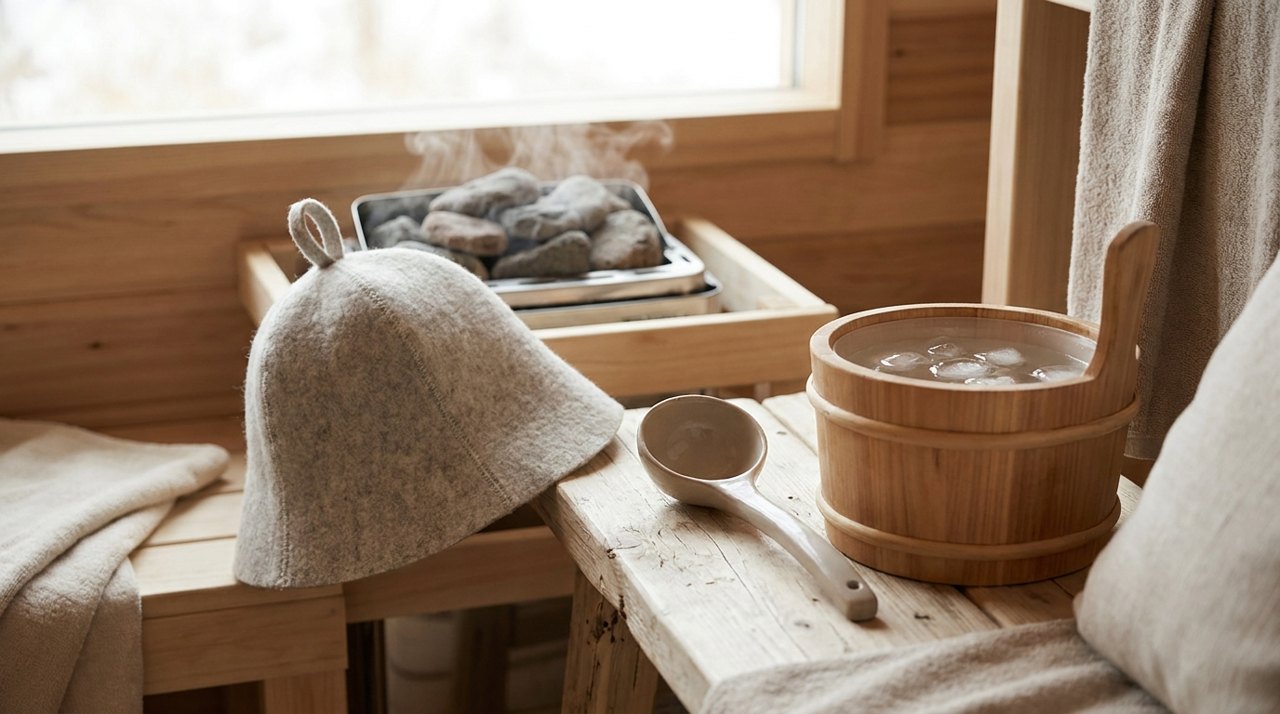
Watch bathers at a Russian banya and you'll notice something odd: people walk from a 90 °C steam room to an ice plunge still wearing their felt hats. It isn't absent-mindedness. Inside the hot room, a thick wool or felt hat insulates the head against the hottest air in the building — the physics of that is laid out in why wear a sauna hat. But the same insulation works in the other direction. Your head is the one part of you that stays above water in a plunge, radiating heat into freezing air while the rest of you is submerged, and wet hair makes it worse. Keeping the hat on smooths out the temperature swing at both extremes, which is exactly what the banya old-timers will tell you if you ask.
It matters that the hat is wool or felt rather than synthetic: natural fibre keeps insulating even when damp, which is the normal state of any hat that has been through three rounds of steam and snow. Something like the this handmade wool felt hat is the standard pattern — thick pressed wool, wide enough brim to shade the ears, no plastic components to heat up. If you want to compare shapes and thicknesses, the full the store covers the range, and the same classic model is available on Amazon if that's easier for delivery.
A first-session checklist
- Start with a cold shower, not an ice hole — the summit can wait a season.
- Enter cold water slowly, feet first, exhaling; keep your head above water at first.
- 15 seconds is a legitimate plunge. Get out while it still feels good.
- Rest warm between rounds for at least as long as you were cold.
- Skip it entirely if you have heart or blood-pressure issues you haven't cleared with a doctor, or if you've been drinking.
- Wool hat on for the hot room, and leave it on for the plunge — the tradition earned its keep.
The contrast is the reward. Build up to it patiently and the ice hole stops being a dare and becomes what it is for millions of Finns and Russians: the moment the whole sauna evening was pointing toward.