Sit in enough sweat rooms around the world and you notice something: every culture that heats itself on purpose has developed its own rituals, its own etiquette, and — more often than you'd think — its own tradition of covering the head. From Finnish smoke saunas to Korean jjimjilbangs, here's a tour of the great bathing cultures, what they do with their heads, and what you should know before you walk in.
Finland: the sauna as a second home
Finland has around three million saunas for 5.5 million people, and UNESCO added Finnish sauna culture to its Intangible Cultural Heritage list in 2020. The classic experience is a wood-lined room at 80–100°C, löyly (steam thrown over hot stones), silence or quiet conversation, and a plunge into a lake or snow afterward. Nudity is normal and unremarkable; sessions are usually separated by gender in public saunas, mixed among family and close friends.
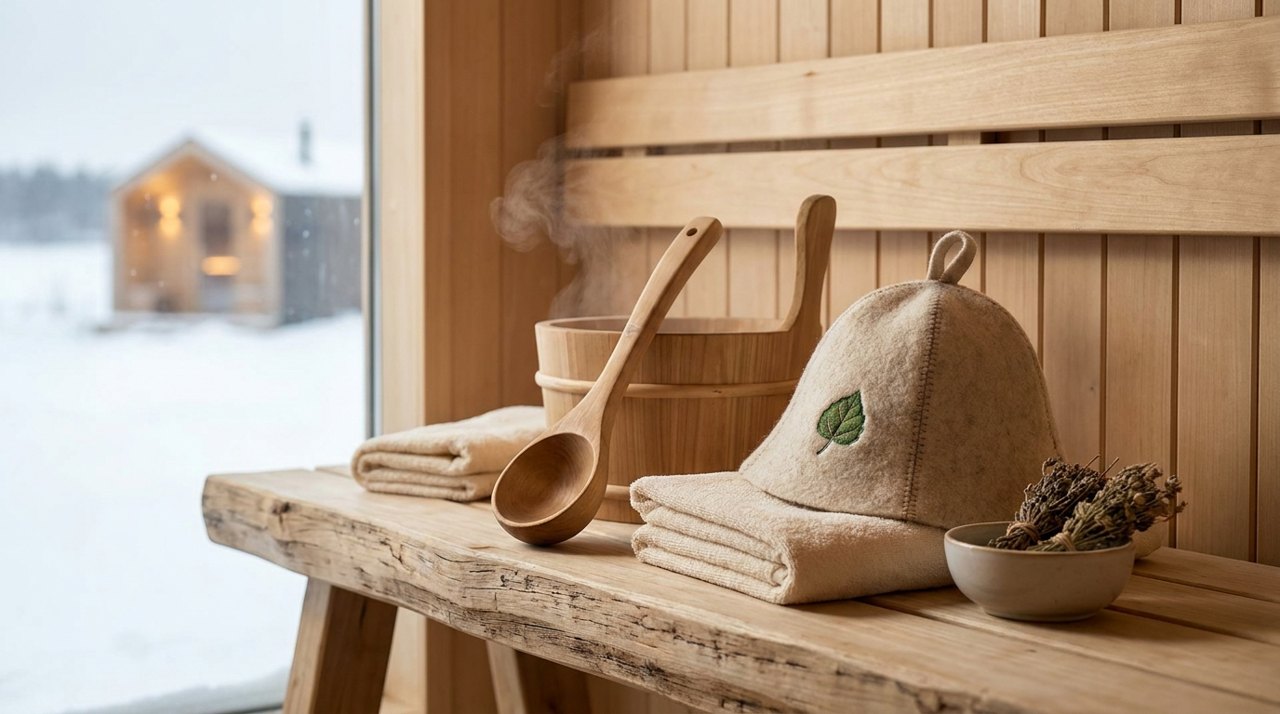
Headwear here is practical rather than ceremonial. Finns traditionally saunaed bareheaded, but felted wool sauna hats have become common, especially among enthusiasts who take long, hot sessions. The logic is simple: your head sits in the hottest layer of air in the room, and wool insulation keeps your scalp and ears comfortable so you can stay in longer. If you're curious about the actual thermodynamics, we've broken it down in Why Wear a Sauna Hat? The Benefits, Explained by Physics.
Russia: the banya and the birthplace of the sauna hat
The Russian banya is the sauna hat's true homeland. A banya runs cooler than a Finnish sauna on the thermometer — typically 60–80°C — but with far higher humidity, which makes the heat feel more intense on skin, ears and scalp. Add venik massage (being rhythmically beaten with bundles of birch or oak branches, which is genuinely wonderful), and you have an environment where a felt hat isn't an accessory, it's standard equipment.
The classic banya hat is thick felted wool, often shaped like a bell or a Budyonovka, sometimes embroidered with jokes or slogans. Walk into any public banya in Moscow and nearly every head will be covered. The tradition runs deep enough that we gave it its own article: the Russian sauna hat, its history and how to choose one. If you want the same protection without hunting through Russian market stalls, a modern equivalent like the the DIVELUX classic is essentially the traditional felt design made to consistent quality — 100% wool, thick enough for banya-grade steam.
Korea: the jjimjilbang and the famous "sheep head" towel
A Korean jjimjilbang is less a sauna than a wellness village: gender-separated bathing floors with hot and cold pools and intense body scrubs, plus mixed-gender common areas with themed sauna rooms — salt rooms, charcoal rooms, ice rooms — where everyone wears the facility's cotton uniform. Many are open 24 hours, and sleeping overnight on the heated floor is completely normal.
Korea's headwear tradition is the most charming of all: the yangmeori, or "sheep head" towel. You fold a standard towel into a cap with two rolled horns sticking out the sides — popularized by Korean dramas and now practically mandatory for the full experience. It's playful, but it does real work, insulating the head in the hotter rooms exactly the way a wool hat does. Staff or friendly regulars will show you the fold if you ask.
Japan: sento, onsen, and the towel on the head
Japanese bathing culture centers on water rather than hot air: the neighborhood sento (public bathhouse) and the onsen (natural hot spring). The ritual matters enormously — you wash thoroughly at a seated station before entering the bath, you never let your small towel touch the communal water, and tattoos are still refused at some traditional establishments, though this is relaxing.
The headwear tradition here is the folded towel resting on top of the head while soaking. It's partly practical — it keeps the towel dry and off the water, and a cold, damp towel on the head helps prevent dizziness in a hot outdoor bath in summer. Many onsen towns also have dry saunas attached, where the same head-covering logic applies. Japan's sauna boom of the last decade (the "totonou" trend — chasing the blissed-out post-sauna state) has made dedicated sauna hats increasingly visible in Japanese facilities too.
Turkey: the hammam and the art of steam
The Turkish hammam descends from Roman baths by way of Islamic bathing culture. It's the gentlest heat on this list — a marble steam room around 40–50°C with near-total humidity — built around ritual rather than endurance. You lie on the heated central marble slab (the göbek taşı), then an attendant scrubs you with a coarse kese mitt, removing an alarming and satisfying amount of dead skin, followed by a foam wash and massage. Modesty is the norm: you keep a checked cotton wrap called a peştemal on throughout. Because the temperatures are moderate, hammams have no real headwear tradition — this is the one stop on the tour where your head can relax uncovered.
A traveler's cheat sheet
| Tradition | Typical heat | Headwear | Dress code |
|---|---|---|---|
| Finnish sauna | 80–100°C, dry-ish | Optional wool hat | Nude (towel to sit on) |
| Russian banya | 60–80°C, humid | Felt hat, near-universal | Nude or sheet; hat stays on |
| Korean jjimjilbang | 40–90°C by room | Sheep-head towel | Facility uniform in common areas |
| Japanese sento/onsen | 40–44°C water | Towel folded on head | Nude; towel out of the water |
| Turkish hammam | 40–50°C steam | None | Peştemal wrap stays on |
Those temperature figures are for where the thermometer usually hangs — your head experiences something hotter in any dry sauna, which we've measured in How Hot Is a Sauna, Really?
What travelers should actually know
- Watch first, then copy. Every bathhouse has regulars. Two minutes of observation teaches you more than any guide — including this one.
- Shower before entering, everywhere. This is the single universal rule across all five cultures, and skipping it is the fastest way to mark yourself as a clueless tourist.
- Respect the nudity norms in both directions. Wearing a swimsuit in a Finnish sauna or Japanese onsen is as awkward as skipping the peştemal in a hammam.
- Hydrate more than you think you need. A banya session with venik can cost you a liter of sweat without you noticing.
- Pack a hat if you're heading north or east. Finnish and Russian facilities sometimes rent or sell hats, but a packable felt hat weighs almost nothing. The the store covers the traditional styles, and the classic grey wool version is easy to grab on Amazon before a trip.
The deeper lesson of the tour is that heat cultures converge on the same discoveries independently: cleanse first, sweat communally, cool down properly — and when the room gets seriously hot, cover your head. Whether that cover is Finnish wool, Russian felt, or a Korean towel folded into sheep horns, the physics is identical. If you're ready to pick one for your own sessions, start with How to Choose a Sauna Hat: Material, Thickness, Fit and Style.